Volvo D2D 2025: A First Offshore Test for Hijacker
Forty hulls, one gun and a stiff south-westerly: the 2025 Volvo Dun Laoghaire–to-Dingle (D2D) Race blew the cobwebs out of Dublin Bay at exactly 14:00 on Wednesday, 11 June. For most of the fleet the 270-mile dash down Ireland’s east and south coasts is a useful warm-up. For us—six amateurs on a freshly refitted Ker 32 called Hijacker—it was trial by saltwater, a dress-rehearsal for next month’s centenary Rolex Fastnet.
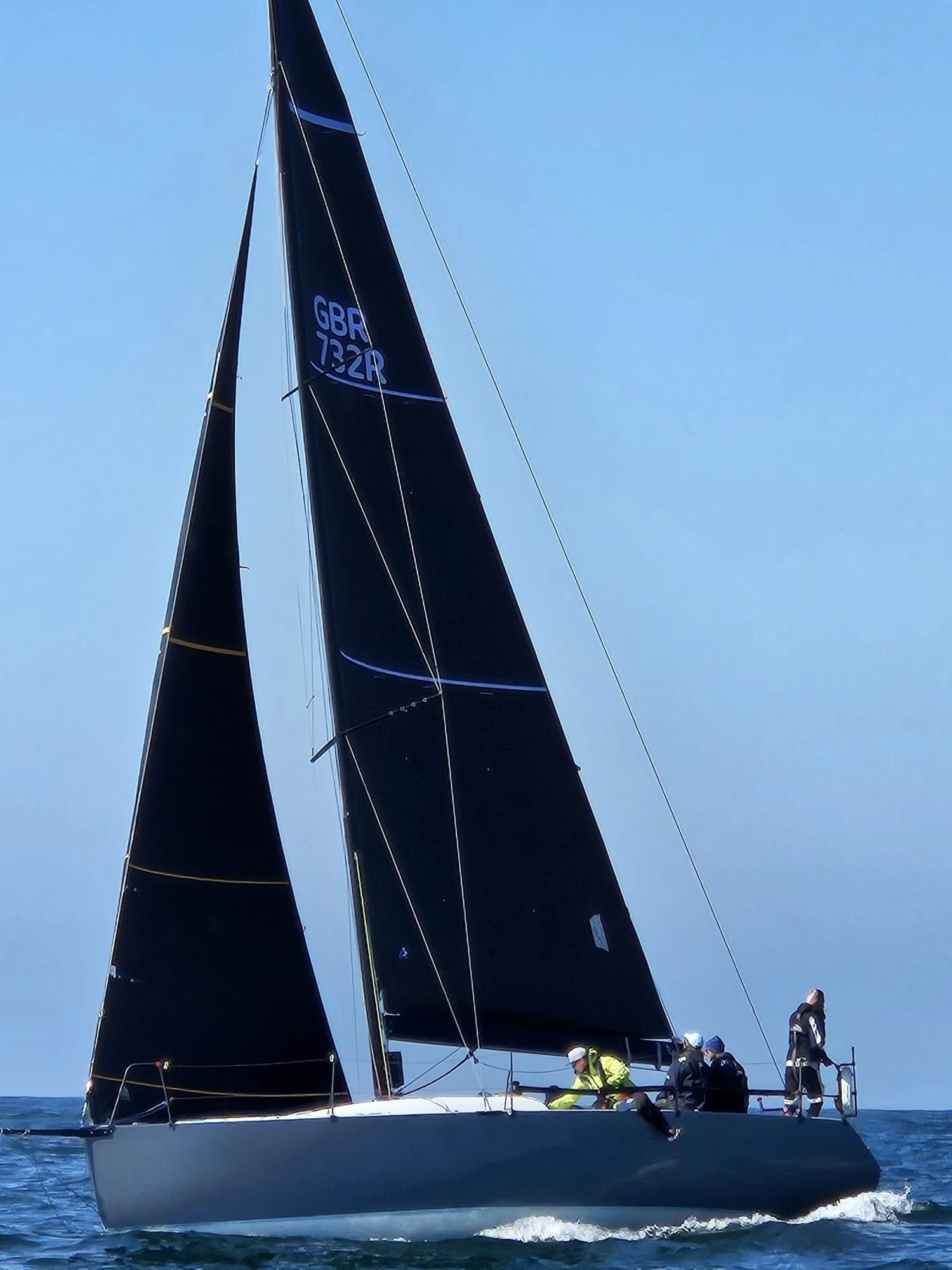
Hijacker in it’s full glory
A compact but uncompromising course
Last Wednesday, we lined up at the start of the Volvo Dun Laoghaire to Dingle Race—our first true offshore regatta, and a qualifier for the 100th edition of the Rolex Fastnet Race later this summer. The D2D covers 270 nautical miles down Ireland’s east and south coasts, rounding Tuskar Rock and Mizen Head before finishing in Dingle. For many, it’s a demanding but compact offshore challenge. For us, it was the first big test of both our crew and our boat.
We sail Hijacker, a Ker 32 performance racer—not designed for comfort, but for speed. At just over 32 feet and with a crew of six, space is tight, both above and below deck. Every manoeuvre is all hands on deck, and sleep is more of a concept than a reality. The boat’s previous life was focused on inshore and coastal racing; offshore, it needed work.
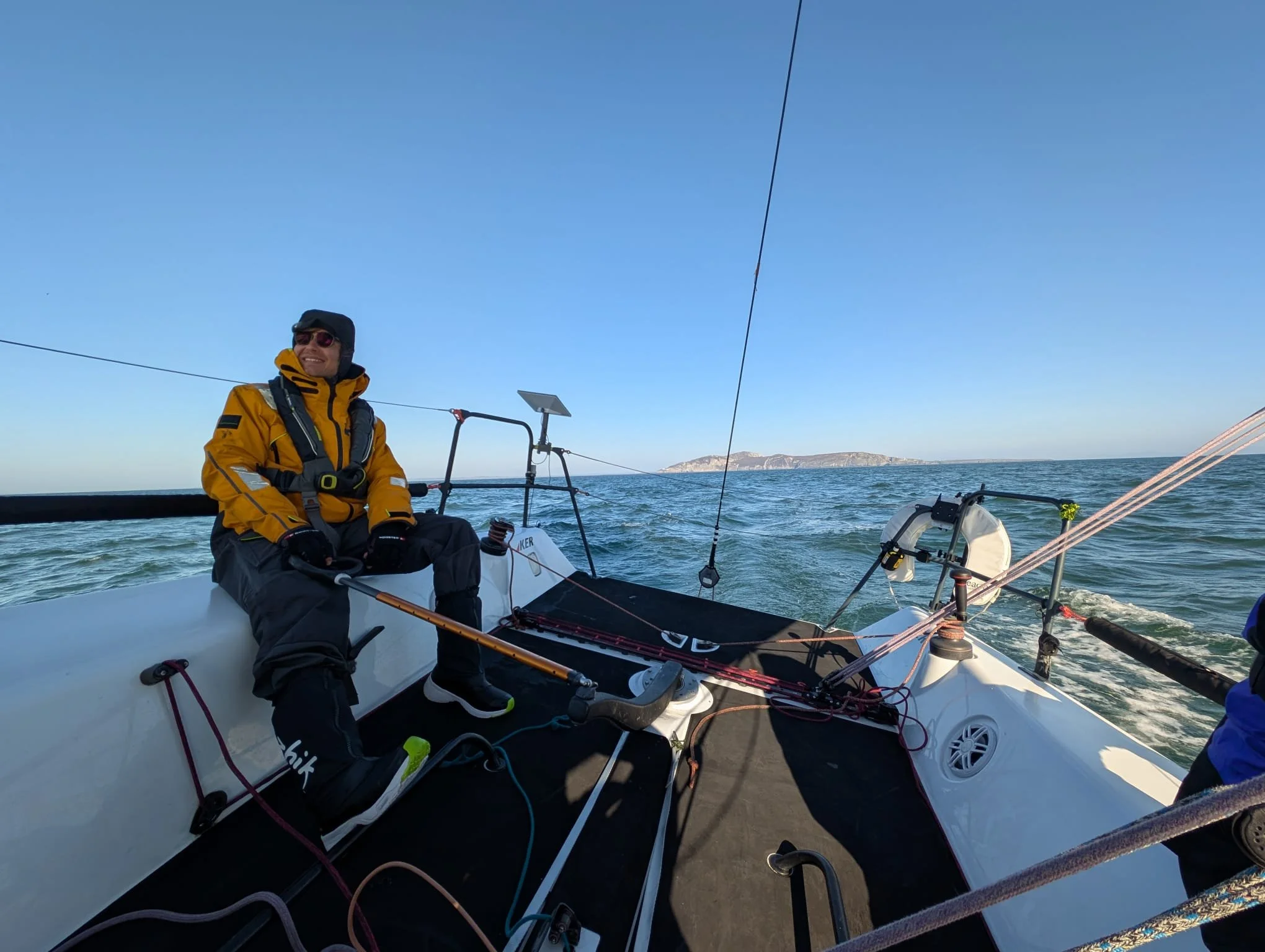
Helming KER32 Hijacker
The boat: fast first, comfortable never
Since committing to the Rolex Fastnet late last year, Greg—Hijacker’s owner and our skipper—has led a massive effort to get the boat offshore-ready. The electrical system was completely redone, the alternator upgraded, and new batteries fitted to keep up with the demands of night sailing and navigation. We added basic offshore necessities: bunks, a toilet, autopilot, and all the equipment required under RORC regulations. It’s been months of effort, late nights, and problem-solving—and still ongoing. But when we cast off for Dingle, the boat was ready enough. And so were we, or so we hoped.
Two starts, one lobster pot
The race start went well initially—we had a clean run off the line. But then the start was recalled after another boat crossed early. On the restart, a critical fitting on the boom kicker slipped out, and we lost several minutes fixing it while the rest of the fleet sailed off. Not the beginning we hoped for.
Conditions were full-on: upwind in 25 knots, with a reef in the main and the J2 up. We found our rhythm quickly and started gaining ground—until we snagged a lobster pot. It’s not uncommon in Dublin Bay, but we didn’t see it in time (the ropes were way out of the lobster pot buoys). The crew stayed calm, sorted the mess, and we got moving again. Offshore racing is like that: you plan and prepare, but things still go sideways. You just deal with them and keep going.
We rounded Tuskar Rock as night fell, making a tactical call to stay close to shore while others headed offshore. It was a gamble. When the wind dropped and the tide turned, those who went out to sea caught the gate just right—and we didn’t. By the time we made it through, they were long gone.
Below deck, it was rough. Two crew got seasick. No one slept much. Hijacker is fast and capable, but she’s no place for comfort. Greg kept us focused, constantly thinking ahead, guiding the strategy and the mood. Offshore, a steady hand is everything.
The second night was cold, wet, and long. The boat slammed through squalls in the dark; the cockpit offered no protection from wind or rain. I’ll admit there were a few moments when I questioned why I was doing this—but you push through. You work as a team, you focus on the next task. Eventually, the sky lightens. The rain stops.
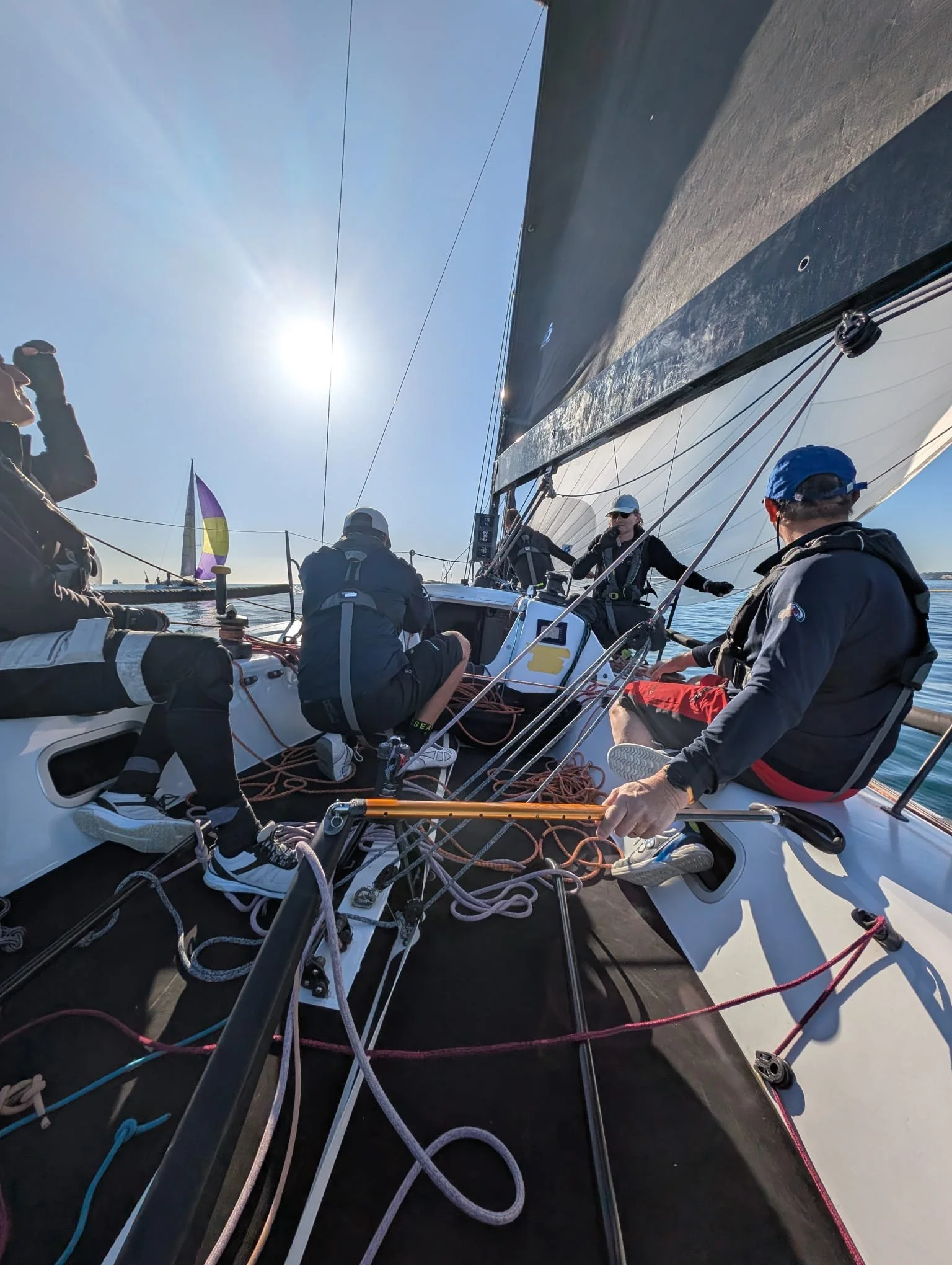
Hijacker crew
Dawn redemption
At sunrise, the Dingle Peninsula came into view, and with it, a lift in mood. We hoisted the spinnaker and made a solid run into Dingle. We crossed the line in 28th. No podium. But for us, finishing this race, in these conditions, with a boat we’ve rebuilt and a crew still learning the ropes—it felt like something to be proud of.
Now, the question is: are we ready for Fastnet? Technically, we’re getting there. The boat’s passed all requirements, and we’ve learned more in these few days than months of local racing could teach. But physically and mentally? We still have work to do. Offshore sailing is hard. It’s unpredictable, exhausting, and at times brutal. But it’s also deeply rewarding.
We’ve qualified. The boat held together. The crew pulled through. And the next challenge—695 miles of the Fastnet Race—now feels a little more within reach.